Bouquet Flowers: A Craft Fair Embroidery Review
First Impression: Soft, Elegant, and Instantly Recognizable
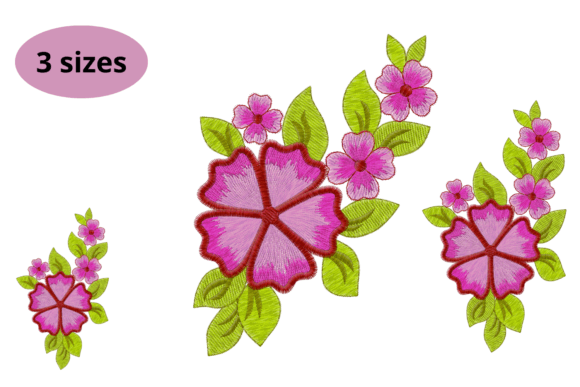
At first glance, Bouquet Flowers reads as soft, elegant, and warmly inviting—not bold or graphic, but rich with handmade charm. The description—“elegant roses, cheerful sunflowers, delicate daisies, and fragrant lavender”—tells me this isn’t a single-flower motif. It’s a layered, balanced composition that leans into botanical authenticity rather than cartoonish simplification. That makes it ideal for craft fair shoppers who value thoughtful detail and tactile quality. It feels premium without being stiff, rustic without being rough, and feminine without being saccharine. For boutique makers and Etsy sellers, that balance is gold.
Where Bouquet Flowers Shines in Real Booth Displays
In my weekend booth setup—featuring embroidered tote bags, aprons, tea towels, patches, fabric pouches, pillow covers, and market totes—Bouquet Flowers performs strongest when given breathing room and context. On a natural linen tea towel, centered just below the top hem? Stunning. On a structured canvas tote bag (10”–12” wide), placed mid-panel? It commands attention without overwhelming. As an embroidered patch (3”–4” diameter), it reads clearly and adds instant character to denim jackets or canvas market bags.
It’s less effective on curved surfaces like caps—unless scaled down to 2.5” max and placed cleanly on the front panel—because the floral variety risks visual clutter on tight curves. On dark fabric, contrast becomes critical: light thread colors must be chosen deliberately, and stitch density should be reviewed to avoid muddiness. And on textured towels (like heavy waffle weave), I recommend testing on scrap first—dense fill areas in roses or lavender sprigs may sink or blur if stabilizer isn’t matched to fabric weight.
Photography & Online Appeal: Why It Converts Well
Bouquet Flowers photographs beautifully for Etsy listings and digital mockups. Its organic flow translates well to flat-lay shots beside dried lavender, ceramic mugs, or hand-poured candles—ideal for cohesive printable mockups that support small shop branding. Because it avoids tiny lettering or micro-details (no stems thinner than 1mm, no stamen smaller than a pinhead), it holds clarity even at thumbnail size. That’s essential for scroll-stopping power in crowded marketplaces.
For commercial embroidery sellers, this design also supports repeatable batch production. It doesn’t demand constant re-hooping or frequent thread changes—roses, sunflowers, daisies, and lavender each carry distinct but manageable stitch structures. No extreme underlay or excessive jump stitches. That means faster turnaround for custom orders and consistent quality across 20+ tote bags or 50+ tea towels.
Design Practicality: What You Need to Check Before Cutting Fabric
Before stitching your first Bouquet Flowers product, run these checks:
- Test on scrap fabric matching your final substrate—especially for tea towel embroidery or apron embroidery where absorbency and weave vary wildly.
- Confirm thread contrast: Light lavender or pale yellow threads may disappear on ecru linen; deep rose or golden yellow pop more reliably.
- Review spacing and isolation: Ensure flowers don’t crowd edges on small items like fabric pouches or embroidered patches—tight margins cause trimming errors.
- Verify hoop size compatibility: If your machine requires 5x7” or larger, confirm the full bouquet fits comfortably within that frame without distortion.
- Inspect stitch density: High-fill areas (rose centers, sunflower disks) can stiffen lightweight fabrics—consider reducing density by 5–10% for soft-touch items like pillow covers.
- Match stabilizer to fabric texture: Tear-away works for stable cottons; cut-away is safer for knits or stretchy market bags.
- Create at least one real mockup before listing—nothing replaces seeing how Bouquet Flowers drapes, folds, and catches light in person.
- Compare fabric colors side-by-side: A cream background lifts lavender; charcoal gray makes sunflowers sing. Don’t assume.
- Confirm commercial licensing before selling finished products—this is non-negotiable for Etsy sellers and wholesale boutique makers.
Booth Impact & Buyer Engagement: More Than Just Pretty Stitches
In a sea of geometric prints and minimalist typography, Bouquet Flowers stands out because it feels *alive*. Craft fair shoppers pause longer at displays featuring it—not just to admire, but to imagine it in their own kitchens, gardens, or gifting routines. On an apron, it whispers “I bake with care.” On a pillow cover, it says “my home is warm and intentional.” That emotional resonance directly lifts perceived value and supports higher price points for handmade products.
It also strengthens brand consistency across product lines. Pair it with neutral linens, matte ceramics, and kraft packaging, and you’ve got a cohesive story—one that works equally well for farmers’ market booths, indie boutiques, and curated Etsy shops. As a machine embroidery design, it bridges categories: it’s equally at home in Bouquets Bunches collections and standalone Embroidery bundles. And because it’s not trend-dependent (no neon, no slang, no dated motifs), it stays relevant season after season.
Careful-Use Notes for Long-Term Production Success
Avoid using Bouquet Flowers at under 2” width—it loses definition in the daisy petals and lavender spikes. On dark fabric, skip pastel threads unless you’re using rayon or metallic for lift. Don’t push it onto heavily textured surfaces (like thick terry cloth or bouclé) without aggressive stabilizing—those tiny lavender stems will vanish. And never skip the stabilizer test: low-density backing + high-density top = puckering on lightweight cottons.
Finally, remember this: Bouquet Flowers isn’t just a digital embroidery file. It’s a customer touchpoint, a booth anchor, and a quiet signal of craftsmanship. When stitched right—with intention, contrast, and care—it transforms a simple tote bag into a keepsake, a tea towel into a heirloom, and a craft fair table into a destination.