Niagara Blossoming
First Impressions: A Redwork Whisper, Not a Shout
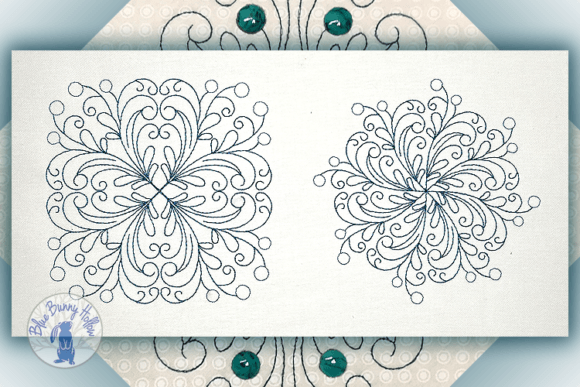
Opening Niagara Blossoming for the first time, I didn’t reach for my hoop—I paused. It’s not flashy or overwrought. This is redwork at its most confident: clean lines, balanced negative space, and a botanical motif that feels both nostalgic and quietly modern. The two included styles—one slightly more detailed, one leaner and bolder—aren’t gimmicks; they’re thoughtful alternatives for different contexts. One reads beautifully on a linen tea towel; the other holds up on a structured cotton tote. There’s no visual noise, no filler stitches masquerading as detail. That’s rare. And refreshing.
Real-World Test: Stitching It Into a Custom Tote Bag for a Local Boutique
Last week, I used Niagara Blossoming to embroider a set of canvas tote bags for a small downtown shop launching a spring collection. We chose the bolder style, centered just below the handle seam on natural unbleached canvas. Why? Because Niagara Blossoming doesn’t compete with texture—it converses with it. The running stitch outlines stayed crisp against the weave, and the fill areas (mostly open satin and subtle fill) didn’t overwhelm the fabric’s hand. Customers noticed the stitching *before* the logo—soft but intentional, handmade but precise. That’s the quiet authority this design carries.
Where It Shines—and Where It Asks for Thoughtful Handling
Niagara Blossoming excels in projects where clarity, charm, and craft integrity matter:
- Custom apparel: Works beautifully on sweatshirt cuffs, pocket corners, or back yokes—especially when you want embroidery that feels personal, not promotional.
- Baby embroidery: Its gentle scale and lack of tiny, dense clusters make it ideal for onesies and burp cloths—no snagging, no stiffness.
- Embroidered patch: Clean edges and moderate stitch density mean it cuts and fuses cleanly without fraying or puckering.
- Holiday embroidery & personalized gifts: Stitches well on velvet napkins, wool-blend blankets, and linen pillow covers—always retaining its warmth, never looking flat or digital.
- Craft business & Etsy seller use: It photographs well in natural light, scales nicely across product mockups, and reads clearly even in thumbnail size—critical for online listings.
But Niagara Blossoming isn’t a “set and forget” machine embroidery design. It rewards attention:
- Small hoop sizes: The full motif fits comfortably in a 4x4 hoop—but if you’re trimming it down for a cap front or baby hat, test the smaller style first. Some delicate stem lines may need slight adjustment for under-3" width.
- Textured or stretchy fabric: On terry cloth towels or lightweight knits, use a medium tear-away + cut-away combo stabilizer. The design’s elegance depends on stability—not stretch recovery.
- Dark fabric: Redwork traditionally relies on contrast. If stitching on charcoal or navy, confirm your red thread reads richly—not muddy. A matte 40-weight cotton or rayon gives depth; avoid high-sheen polyester unless intentionally glossy.
- Curved surfaces (caps, hats): The motif’s horizontal flow makes it less ideal for crown curves—but perfect for flat visors or side panels.
What Niagara Blossoming Adds to Your Finished Product—Beyond Thread
It’s easy to underestimate how much mood a single embroidery file contributes to perceived value. Niagara Blossoming elevates a plain kitchen towel into something worthy of gifting. It turns a generic sweatshirt into a boutique-ready piece. For Etsy sellers, that translates directly to higher conversion: customers see craftsmanship, not decoration. For small shop owners, it supports brand consistency—imagine it stitched on matching aprons, tote bags, and gift tags. It’s cohesive without being repetitive.
And because it’s redwork—minimal color, maximum line—it invites customization. Swap red for indigo, forest green, or oatmeal. Add a single French knot center to each bloom for tactile interest. Layer it subtly beneath sheer organza on a nursery pillow cover. It’s a design asset, not just a file.
Practical Designer Notes You’ll Actually Use
Before committing to your next batch of finished products, here’s what I do—and recommend:
- Test on scrap fabric first, using your exact stabilizer stack and thread. Redwork shows every tension hiccup.
- Review stitch density in your editing software. Niagara Blossoming avoids excessive overlap—but check for any unintentional double-stitching in tight curves.
- Confirm hoop size compatibility with your machine and intended project. Don’t assume 5x7 is safe—some versions of redwork designs compress poorly.
- Inspect small details at 200% zoom: Are stem ends tapered? Do leaf points land cleanly? These are the things customers notice in close-up photos.
- Test black-and-white mockups. If it reads well in grayscale, it’ll hold up on any background.
- Compare light and dark fabric backgrounds in your design preview—especially if offering multiple colorways.
- Use proper stabilizer for your fabric type. Redwork needs support, not suppression—choose based on drape, not just weight.
- Verify licensing before selling finished items or digital embroidery files. Niagara Blossoming is listed as a Sewing Crafts / Embroidery product—confirm whether commercial use is included or requires separate permission.
Final Thought: A Design That Respects the Maker—and the Wearer
Niagara Blossoming doesn’t shout “look at me.” It says, “I belong here.” Whether stitched on a baby’s onesie, a chef’s apron, or a limited-run tote for a local florist, it feels earned—not applied. That’s the hallmark of a truly usable embroidery design. It serves the project, not the ego. For designers, crafters, and creative entrepreneurs who care about how their work lands—not just how it loads—that’s everything. Use it thoughtfully, test it honestly, and let its quiet confidence speak for your craftsmanship.