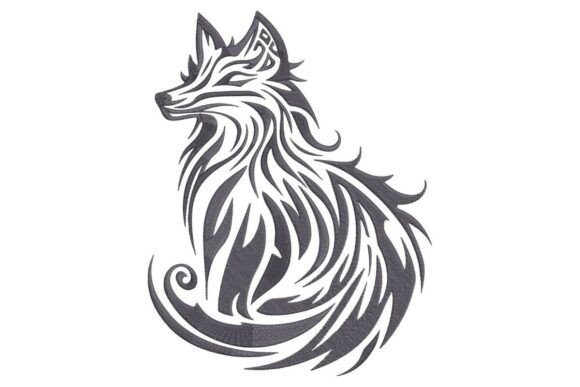
Elegant Fox with Swirling Tribal Tail
First Impression: Bold, Mystical, and Instantly Memorable
As an embroidery designer who’s prepped over 200 craft fair booths—and watched thousands of shoppers pause at a single stitch—I’ll tell you straight: Elegant Fox with a Swirling Tribal Tail and Celtic Mark lands with quiet authority. It’s not cute. Not rustic. Not minimalist. It’s elegant, yes—but layered with mystical and bold. That blend is gold for handmade markets. Customers scanning your booth don’t stop for “pretty.” They stop for presence. This design has it: the fox’s poised posture, the intentional gaze over its shoulder, the seamless fusion of tribal rhythm and Celtic continuity in the tail—every element signals intentionality and craftsmanship.
Where It Shines: Product-by-Product Reality Check
This isn’t just a design—it’s a versatile craft fair product engine. Here’s where Elegant Fox with a Swirling Tribal Tail and Celtic Mark earns its keep:
- Tote bag design: Perfect as a centered chest or lower-back focal point. The swirling tail flows naturally along fabric drape, adding movement without clutter.
- Apron embroidery: Ideal on the pocket or bib—its vertical balance reads clearly even when the wearer is bent over a display table.
- Tea towel embroidery: Works best on linen or medium-weight cotton. The bold line weight holds up against kitchen texture; avoid ultra-thick terry weaves unless you reinforce stabilizer.
- Embroidered patch: A standout. Clean outer edge, strong silhouette, and inherent story make it highly collectible—ideal for badge reels, denim jackets, or gift sets.
- Fabric pouch & pillow cover: The fox’s compact seated form scales beautifully. At 3.5–4.5 inches tall, it fills space without overwhelming small surfaces.
- Caps & curved surfaces: Use only on front panels—not curved crowns. Test hoop placement first; the tail’s swirl can distort if stretched across severe curves.
What Buyers Actually Notice (and Why It Sells)
In under three seconds, craft fair shoppers register: story, skill, and style. Elegant Fox with a Swirling Tribal Tail and Celtic Mark delivers all three. The Celtic mark adds heritage weight; the tribal tail brings energy. Together, they suggest depth—not decoration. That perception lifts perceived value instantly. Buyers associate it with premium handmade quality, not mass-produced craft. On Etsy, that translates to stronger click-throughs on listings tagged “Celtic embroidery,” “wild animals embroidery,” and “tribal machine embroidery design.” It also photographs exceptionally well: high contrast between thread and fabric reads sharply in natural light, and the balanced negative space around the fox keeps mockups clean—even on printable mockups used for social ads or email banners.
Production Truths: What Makes or Breaks Batch Success
This design is repeatable—but only with smart prep. Its strength lies in confident lines and rhythmic repetition (especially in the tail), which means consistent stitch density across runs. However, watch these pitfalls:
- Dense stitch areas: The Celtic knotwork near the tail base may require reduced fill density or satin-stitch layering—test on scrap first.
- Tiny details: Avoid shrinking below 2.75 inches wide. Fine linework in the ear or facial contour blurs on dark fabric or textured tea towels.
- Fabric texture matters: Works brilliantly on smooth cotton, linen, and twill—but skip heavy burlap or nubby wool blends unless you add cutaway + tear-away stabilizer combo.
- Thread colors: Recommend 2–3 high-contrast options (e.g., charcoal fox + ivory swirl on navy; deep rust fox + cream knotwork on oat). Avoid monochrome combos—they mute the tribal/Celtic dialogue.
Booth & Brand Impact: Beyond the Stitch
Your craft fair table isn’t selling embroidery—it’s selling identity. Elegant Fox with a Swirling Tribal Tail and Celtic Mark reinforces a cohesive brand voice: thoughtful, nature-rooted, culturally resonant. When paired with other Wild Animals embroidery designs—or even botanical or mythic themes—it builds narrative consistency. Hang one embroidered pillow cover beside a matching tote and patch set, and customers subconsciously see a collection, not isolated items. That encourages multi-item carts. Plus, because the fox faces *into* the display (not outward), it subtly draws the eye inward—toward your pricing tag, your business card, your next conversation.
Designer’s Must-Do Checklist Before Cutting Thread
Before digitizing, hooping, or listing online:
- Test the machine embroidery design on scrap fabric matching your final product (e.g., canvas for totes, flour-sack cotton for tea towels).
- Check thread contrast under both daylight and booth lighting—some metallics or heathers shift tone.
- Review spacing between tail swirls and fox body—tight gaps risk skipped stitches or thread nests.
- Confirm hoop size compatibility with your frame system; this design likely fits standard 4x4 or 5x7 hoops, but verify before batch loading.
- Inspect stitch density in the Celtic mark—if fill is too dense, reduce by 15% and retest.
- Use appropriate stabilizer: medium-weight cutaway for stretchy fabrics, tear-away for stable cottons.
- Create at least one real-world mockup—photograph it on a tote, then on a pillow, then pinned to a corkboard. Does it read from six feet away?
- Compare how it looks on light vs. dark fabric swatches—you’ll likely need separate thread palettes.
- Confirm commercial licensing status before selling finished products—this is non-negotiable for Etsy sellers and small shop product lines.
Final Thought: This Is a Signature Piece
Elegant Fox with a Swirling Tribal Tail and Celtic Mark isn’t background filler. It’s a statement piece disguised as a wild animal embroidery design. It performs across categories, commands attention without shouting, and rewards careful execution with tangible returns—higher average order value, repeat booth traffic, and stronger digital engagement. For embroidery business owners building a recognizable line, for Cricut crafters expanding into stitched goods, and for boutique makers curating meaningful handmade product—this is the kind of digital embroidery file that becomes a cornerstone. Just remember: its elegance comes from precision, not magic. So test, refine, and stitch with intention.